Mice’s activity patterns go beyond what you can control within your property. Factors from neighboring properties often contribute to increased mouse activity. Their presence generally relies on a series of conditions, environmental components, and structural factors.
Biological Connection
Mice are living organisms that follow a set of survival instincts. They will seek food, water, and shelter, primarily. If neighboring properties cater to these needs, mice are likely to invade those properties. Abandoned or unattended yards, unsealed waste, or accessible food sources in neighboring locations can attract mice. They have excellent climbing skills and can travel across fences or walls, extending their territorial reach.
Structural Factors
Structural conditions in neighboring properties can also influence mouse activity. For example, if adjoining units in an apartment complex have infestations, it’s likely the infestation will spread to other units. Mice can move freely through common walls, ducts, and utility channels. Similarly, in suburban areas, dilapidated sheds, barns, or outbuildings in neighboring properties can become breeding grounds for mice. These structures can provide secure shelter, making them attractive to the rodents.
Environmental Aspects
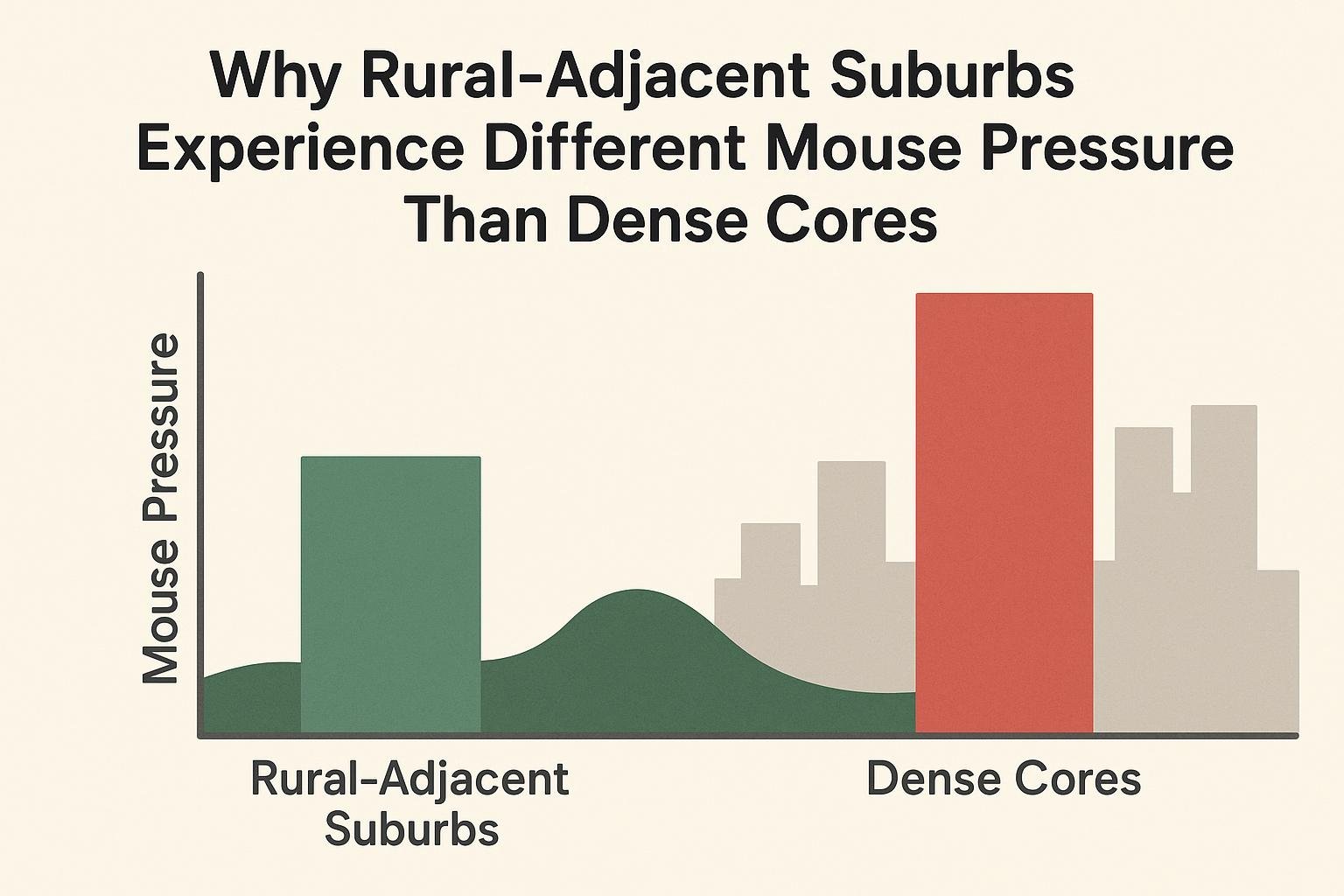
The immediate environment surrounding your property also plays a significant role in mouse activity. If you live near fields, woods, or similar natural habitats, mice are more prevalent. Their populations can proliferate in these conditions, and your property might become a target when they expand their territories.
Unpredictability and Variability
Precisely predicting or controlling how neighboring properties affect mouse activity is challenging. Mice behavior varies depending on numerous factors, and their reactions to different environmental cues can fluctuate widely. For example, some rodents might be drawn to a neighbor’s unkempt yard, while others might not find it appealing.
Common Misconceptions
A common misconception is that a clean and well-structured property would be free from mouse intrusion irrespective of the neighboring conditions. But mice often venture from adjacent properties seeking expansion of territory, food, or shelter. Therefore, the cleanliness or structure of your own property alone may not always be a sufficient deterrent.
Limits and Constraints
Indeed, controlling factors beyond your property boundaries can be difficult. You cannot dictate how your neighbors maintain their property or control the environmental elements surrounding your home. These realities underscore the limitation in fully controlling mouse activity around your residence.
Conclusion
In summary, understanding how neighboring properties affect mouse activity clarifies one key fact – you may not always be able to control these factors. When considering mouse activity issues, it’s important to factor in these limitations and adjust your expectations accordingly.