Apartments, condos, and other multi-unit structures provide a complex environment that mice can exploit to their advantage. One of the critical aspects of these structures is the presence of wall cavities and shared chases, which these rodents use in multiple ways. This article delves into the specifics of these behaviors, shedding light on the biological and environmental factors that influence them.
The Role of Wall Cavities
One fundamental purpose of wall cavities for mice involves providing a safe haven. In many cases, these spaces serve as hiding spots where mice escape from potential predators. Wall cavities offer a dark, enclosed environment that mice find ideal for security purposes.
The second function of wall cavities for mice involves nesting. Mice often build their nests inside wall cavities, using materials like shredded paper, fabric, and plant matter. The choice of wall cavities for nesting stems from the mice need a quiet, uninterrupted place that is close to food and water sources.
Shared Chases in Multi-Unit Buildings
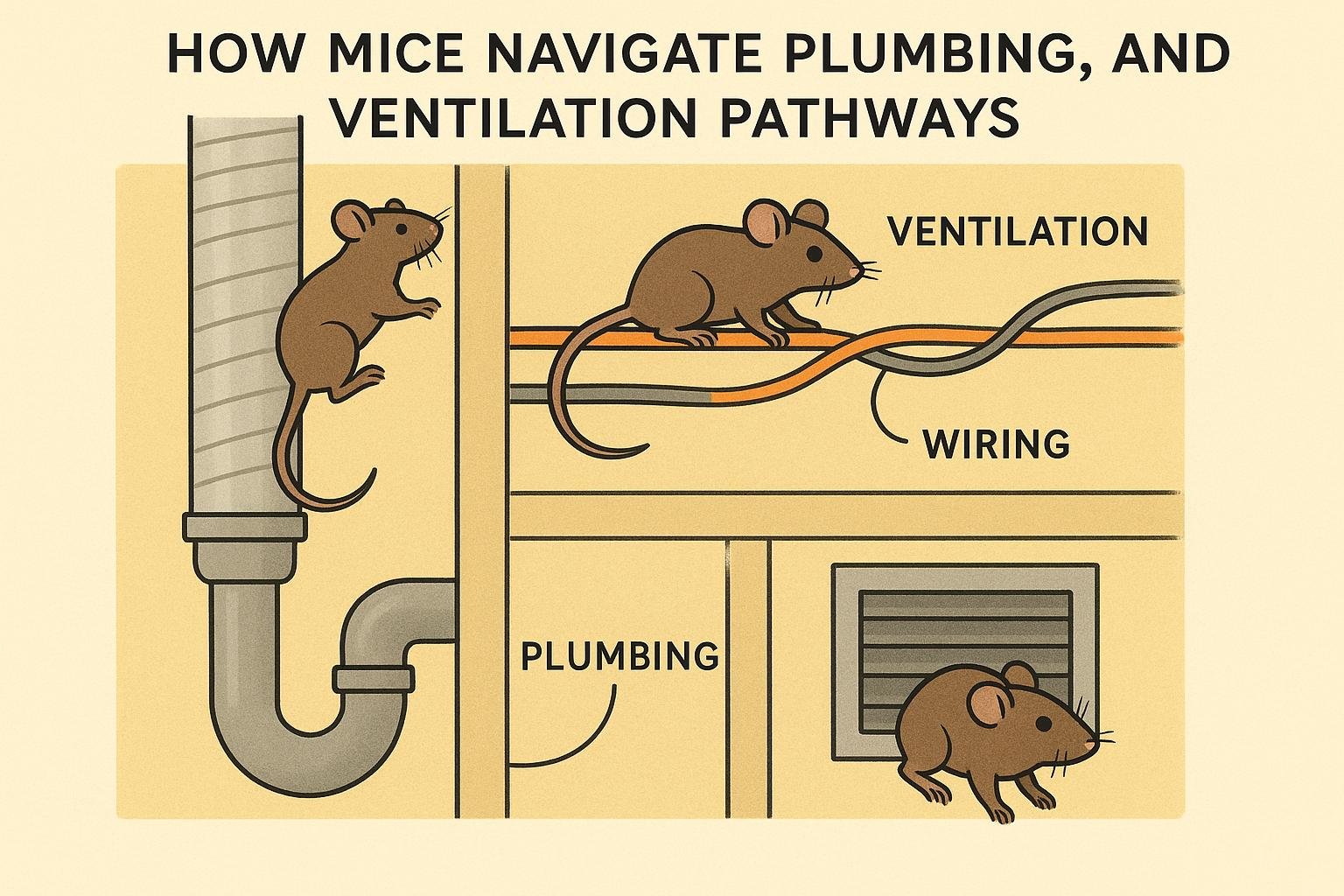
Shared chases in multi-unit buildings, vertical cases that house utility lines, also play a critical role in the life of mice. Primarily, they often act as convenient travel routes. Not only are these chases protected spaces away from human activity, but their vertical nature can allow mice to traverse between different levels of a building.
Interaction of Biological and Environmental Factors
The activity of mice in multi-unit buildings depends on their biological tendencies and the environment around them. Mice’s inherent preference for dark, enclosed spaces drives their attraction to wall cavities and shared chases. Furthermore, their need to be near food sources often leads them to buildings where they can find a vast supply.
Misconceptions and Limits
A common misunderstanding about mice in multi-unit buildings is that they only live in dirty places. The truth is mice are opportunistic and will choose a location based on its viability as a safe haven and food source, not cleanliness levels. Another misconception is that sealing small gaps in a building is enough to prevent a mouse infestation. Mice can squeeze through gaps as small as a quarter of an inch, making it tough to completely mouse-proof a building through simple gap sealing measures.
Conclusion
Understanding how mice use wall cavities and shared chases in multi-unit buildings requires a grasp of their basic preferences and habits. While these spaces provide the safety and nesting spots that mice seek, it is crucial to realize that preventing a mouse infestation needs more than sealing small gaps. This insight is part of an ongoing endeavor to better understand and manage the challenges that come with sharing our built environment with mice.